Their first time on stage
A plan for you and your child, for a school show, an assembly or a class talk. Pick what suits you; you don't need to do it all.
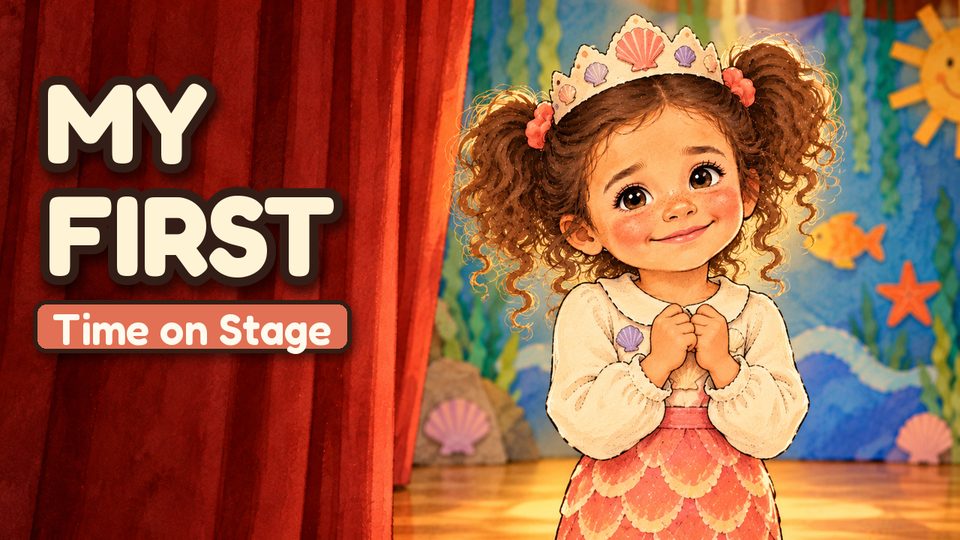
Watch together, if you haven't alreadyMy First Time on Stage, 5 min. A week or so before, so there's time to practise.

For you too
Watching your child perform can feel exciting and nerve-racking at once. You might also feel disappointed if they decide not to take part.
Ask the teacher which adult can help and agree a step your child can manage. Helping offstage or watching this time can be part of the plan.
If worry becomes intense, keeps returning or affects everyday activities, speak to the teacher or your doctor.
Read more Show less about this first, for grown-ups
You may be excited to see your child perform and nervous about how it will feel for them. You might also feel disappointed if they decide not to take part. Those feelings deserve somewhere to go, without your child having to put on a show to make you happy.
Ask the teacher what will happen, which adult can help and whether your child can see the space beforehand. If they want to practise at home, keep it short and stop when they have had enough. Agree a small step they can manage: joining the group, trying one line or helping offstage.
If you cannot attend, tell your child beforehand and explain who will be there to help. Avoid promising a seat or a signal you cannot be sure of.
Afterwards, make room for their version of the day. They may want to talk, have a cuddle or leave it until later. If worry becomes intense, keeps returning or affects everyday activities, speak to the teacher or your doctor.
Try one or two together
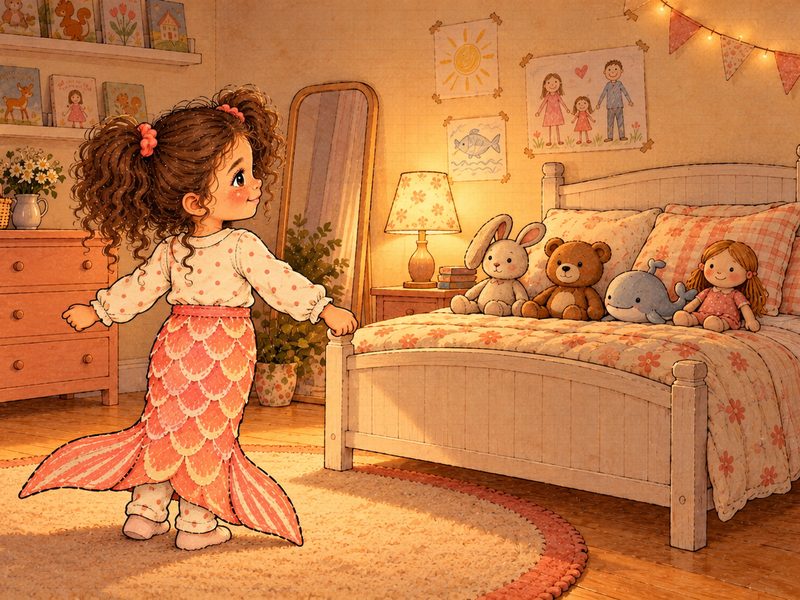
A tiny audienceLet your child practise for a few favourite toys or family members. Start small, and let them choose when they're ready for a bigger audience.

Make a mistake on purposeDo it yourself. Say "Oops, I'll try that again," and show them how you restart.

Walk on, walk offMark out a stage at home and practise. Ask the teacher if they can try the real one.
Ask them: "What are you wondering about?" They can show you or draw it. "Does your tummy feel funny? Tell me about it."
Ask the teacher what your child's part is, and agree any help they need with talking, moving around or noisy spaces.
Make your plan
Choose what works for your family. Your answers will appear in a simple plan below that you can print and share with your child.
Where will you be?
What will your sign be?
If they forget their words?
Just before going on?
Big Little Firsts · www.biglittlefirsts.com
Our Stage Day Plan
I love you, whatever happens.
Read it to your child in the days before.
Big Little Firsts · www.biglittlefirsts.com
On the day

Before you goSleep, food and water help. So does a trip to the toilet.
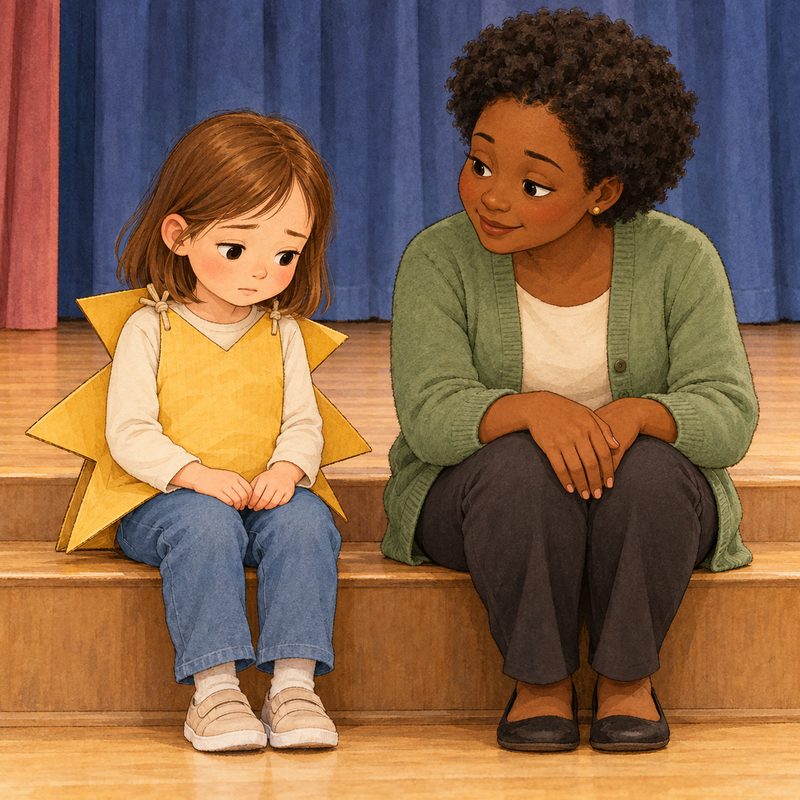
If they don't want to go onListen, and agree a part they can manage with your child and the teacher: joining the group, helping offstage, or watching this time.

If they freeze or forgetGive them a moment. If you're there, use your agreed sign. Their teacher can help them find their way forward.
Afterwards

Notice what they didSay what you saw, whatever part they managed.
Choose words that match what they actually did, whether they performed, helped offstage or watched.
Ask "How was it for you?" Let them talk, or leave it until later.
Talk to the teacher or your doctor if the worry is intense, getting worse, or affecting everyday life.
Questions you might be asking
What if they don’t want to go on?
Ask what feels difficult and listen before deciding what to try. Agree a manageable step with your child and the teacher, which might mean joining the group, helping offstage or watching this time.
What if they freeze or forget their words?
Give your agreed sign if you are there, and let the teacher offer help. Afterwards, ask how it felt without making them explain the mistake or repeat the performance.
What if I can’t be there?
Tell them beforehand and explain which familiar adult will help. Make time afterwards to hear about it, without promising a recording or another audience.
What if the lights, noise or costume are too much?
Tell the teacher exactly what your child finds difficult and ask about changes before the event. These might include a quieter waiting place, different clothing or a smaller role; agree them with your child.
What if they come offstage upset?
Offer comfort and somewhere quieter if they want it. Let them tell you what happened when they are ready, without insisting that it went well.
When is the worry more than this one performance?
Speak to the teacher or your doctor if worry is intense, worsening or stopping everyday activities such as school, play or seeing friends. You can also ask for help with severe distress about this event alone.
Did this help, or is there a first you'd like next? Send us a note. Please don't include your child's name or school.